Retired NFL Player Michael Oher's Allegations Uncover Troubling Details Beyond "The Blind Side"
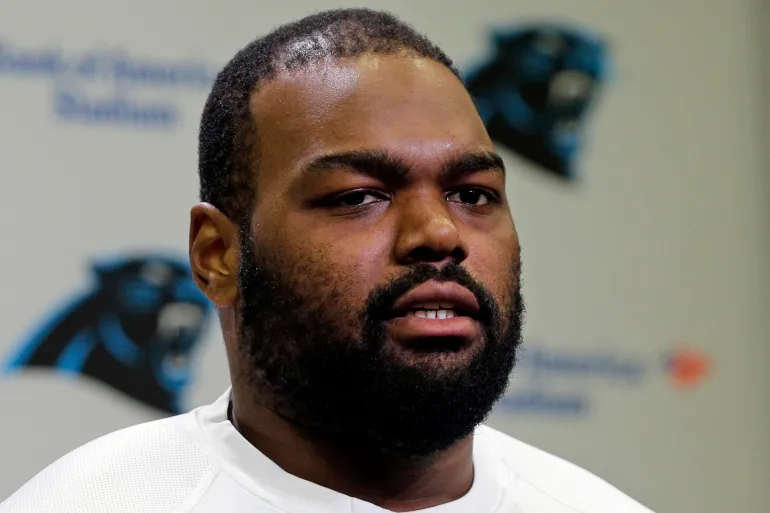
The rags-to-riches story of Michael Oher, the former NFL player whose journey from poverty to Super Bowl success was popularized by the 2009 movie "The Blind Side," has taken a dramatic and distressing turn. A recent court filing in Shelby County, Tennessee, obtained by ESPN, has exposed a starkly different narrative than the one portrayed on the big screen. Oher alleges that his purportedly loving and supportive relationship with the Tuohy family, as depicted in the movie, was marred by manipulation, exploitation, and a disturbing lack of transparency.
The widely acclaimed movie, "The Blind Side," which earned Sandra Bullock an Academy Award for her portrayal of Leigh Anne Tuohy, focused on the Tuohy family's role in helping Oher overcome challenges and achieve success. However, the recent court filing claims that Oher was not adopted by a wealthy white family looking out for his best interests. Instead, the family is accused of using a conservatorship to wield control over Oher's business deals and manipulate his earnings, leaving him feeling exploited and betrayed.
The petition filed by Oher seeks to end the conservatorship held by the Tuohy family, cease their use of his name and image, and demand an accounting of their earnings generated from using his likeness. Furthermore, Oher is seeking compensatory and punitive damages, as well as a "fair" share of the profits he believes he is owed.
Oher's journey, as described in the court filing, reflects a deeply unsettling tale of deceit and exploitation. The petition claims that the Tuohy family tricked Oher into believing he was being adopted, using a conservatorship as a legal means to control his business dealings. This allowed them to negotiate a movie deal that ultimately made millions for the family, while Oher himself received no funds from the film that chronicled his life story. It's a stark contrast to the image of a loving, adoptive family that "The Blind Side" portrayed.
The allegations highlight the emotional toll that Oher's supposed relationship with the Tuohy family took on him. Oher's attorney, J. Gerard Stranch IV, explains that the family's deception "devastated and wounded [Oher] deeply," particularly given his unstable upbringing. Oher's belief that he was adopted filled a void in his life, and the revelation that he wasn't actually adopted left him emotionally shattered.
Beyond the alleged manipulation of the movie deal, Oher's grievances extend to how he was portrayed in "The Blind Side." He asserts that the movie depicted him inaccurately, painting him as "unintelligent" and in need of the Tuohy family's intervention to succeed in football. Oher, who is Black, had played football and was knowledgeable about the sport well before the Tuohys entered his life. This portrayal perpetuated stereotypes that he found hurtful and damaging.
Oher's recent court filing adds complexity to the already intriguing narrative surrounding his life. Despite the challenges he faced growing up, Oher went on to have a successful career in the NFL. He used his platform to establish a foundation aimed at empowering disadvantaged youth through education, mentorship, and healthy living. In his most recent book, "When Your Back's Against the Wall," he reflects on the dichotomy between the positive impact of "The Blind Side" and the pain caused by the events surrounding it.
In response to Oher's allegations, Sean Tuohy, a member of the Tuohy family, expressed his devastation and maintained that they never intended to exploit any of their children, including Oher. He defended their actions, claiming that the conservatorship was the only option available at the time and that they would respect Oher's wishes moving forward.
The unfolding situation raises questions about the ethics of profiting from another person's life story, the dynamics of fame and manipulation, and the complexities of personal narratives in the media. Michael Oher's journey from poverty to NFL success, as seen through the lens of "The Blind Side," has taken a sobering turn, shedding light on a story far more complicated than the one the movie presented to the world.